On Yom Kippur, 2 October 2025, the United Kingdom was shocked by a murderous attack on worshippers at a synagogue in Manchester. Shocked, but not surprised – such was the reaction within the Jewish community.
Anti-Jewish hate speech has gone hand in hand with the demonisation of Israel and of those associated with it. It has become rampant since the very afternoon of the Hamas massacre on 7 October 2023, as thousands of rockets were still being fired from Gaza on Israeli civilians. At the University of Manchester, a speaker at a rally on 8 October 2023 said she was ‘full of joy and pride’ on the occasion of the cold-blooded murder, rape and kidnapping of innocent civilians of all age groups. Just four weeks later Sami Pinarbasi, a staff member at the University of Manchester’s School of Arts, Languages and Cultures, posted on social media images of Hamas’s Al-Qassam brigades calling them ‘my new spokespersons’ (the University later claimed that he no longer worked there). In the academic year 2023/24 the University of Manchester received 36 complaints on antisemitism but none was upheld. Jewish students complained of being spat on by other students and of being called ‘baby killers’. Graffiti saying ‘up Hamas’ was seen on campus. But while Jewish complaints were ignored the University’s Humanities Faculty Committee discussed ‘fear on campus for staff and students in organising events and raising awareness about the horrific genocide in Palestine’ and ‘support for staff and students who are openly critical on social media about the oppressions and crimes committed by the state of Israel’.
Many community leaders in Manchester with whom I had worked for many years enthusiastically embraced the demonisation narrative accusing Israel of ‘massacres’ and ‘genocide’. Not once did they acknowledge that the fighting with all its horrific consequences for the civilian population of Gaza was inflicted on Israel by Gaza-based Hamas deliberately with the expressed goal of annihilating Israel and its Jewish population. For Esme Ward, Director of Manchester Museum, this stance appeared to come as a natural part of a more general postcolonial posture on a par with repatriating Aboriginal artefacts held at the Museum to Australia – as if there was a pre-defined checklist of choosing sides, and more importantly of demonstrating to the wider public that one is choosing sides. Luthfur Rahman lost his Council seat and his job as Deputy Leader of Manchester City Council after devoting his local election campaign in 2024 almost exclusively to Gaza. It was a topic he knew next to nothing about, that was of no immediate relevance to the daily lives of his constituents and that was completely beyond the remit of the office for which he stood as candidate. The calculation will have been to rise to the challenge set by his opponent – George Galloway’s Workers Party which had made anti-Israel hate not just the focus of its election campaign but the only point on its programme – and to try to mobilise the Muslim vote, presumed to be furious at Israel. As things turned out voters listened to his campaign and went for the original, replacing him by the Workers Pary candidate. Afzal Khan MP, who had championed the causes of Muslim minorities in various countries and had, unlike the other two, a long track record of involvement in pro-Palestine campaigning, had already accused Israel of ‘genocide’ back in 2002, later expressing regret (and demonstrating the randomness of the genocide accusation: it is predicated not on the scale of destruction, the alleged intent of the perpetrators, or on any other circumstance other than the accuser’s own temper). In the days immediately following the Hamas massacre he kept his silence, avoiding an unequivocal expression of sympathy for the Israeli victims, then re-surfarced with the ‘genocide’ narrative which he continued to push relentlessly for a whole year. On the first anniversary of the Hamas attack I published an open letter challenging him on the matter; I am pleased to say that I have not heard him use the term ‘genocide’ in this connection since.
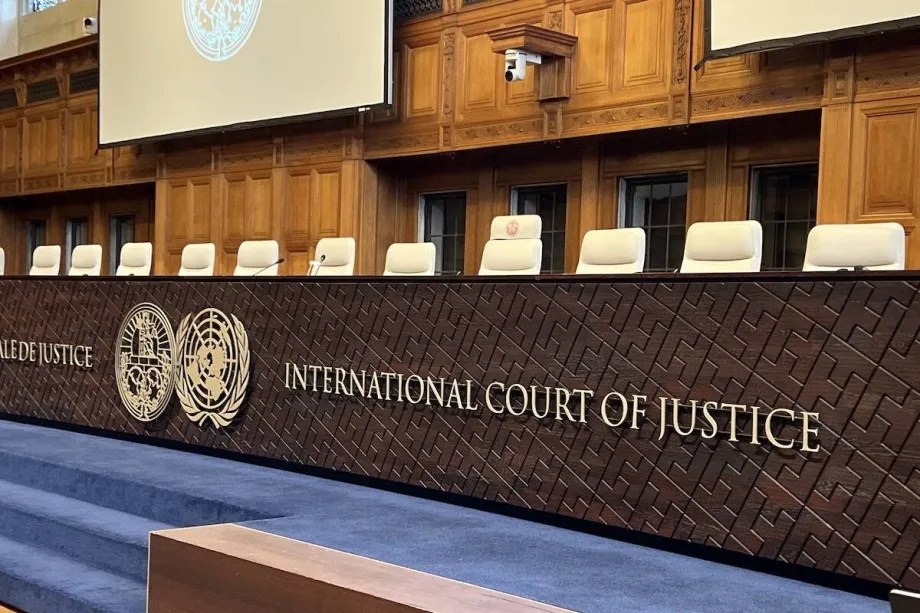
What’s in a word? ‘Genocide’ is the most horrific crime on the books but it carries a very precise and narrow legal definition. The past two years have seen it politicised more intensely than ever before. The new quality is to directly instrumentalise the legal arena for political positioning: In December 2023 South Africa submitted an application to the International Court of Justice accusing Israel of genocide. Over 400 academics at the University of Manchester hurried to sign a letter in which they falsely claimed that the ICJ had concluded that ‘Israel was plausibly committing genocide’. Notwithstanding the fact that the ICJ’s presiding judge has since clarified that its ruling on ‘plausibility’ referred to the court’s acceptance of its jurisdiction on the matter and the right of the parties involved to make submissions and not to the merits of the case itself, this ‘fake news’ cited by the Manchester academics continues to circulate. Signatories of the Manchester letter included people I had worked with during my 25 years at the University: Aoileann Ní Mhurchú, James Nazroo, Erica Burman, Ludi Simpson, Wiebke Brockhaus-Grand, Nusrat Ahmed, Eithne Quinn, Alexia Yates, Bryony Rigby, Bertrand Taithe, David Alderson as well as Sami Pinarbasi (despite the University’s claim that he no longer worked there when he posted his open support for Hamas two months earlier). Most of them knew little or nothing about the Middle East conflict. Their signatures are at least in part an act of identity performance aimed to demonstrate belonging to a fashionable cause. Part of that identity is the flare of rebellion against the prevailing order: Israel, viewed as the world’s principal evil, has taken the place of the figure of the conspiratorial and treacherous Jewish money-lender. One of the signatories, whose name I will not mention here, explained to me that she did not understand the content of the letter but signed it because she was eager to ‘do the right thing’. Academics are now signing political protest letters not based on evidence or expertise but on a wish to be seen as belonging to a crowd. It’s become a cult-like enterprise led by inflammatory slogans, harbouring and reproducing disinformation.
Many have commented on the meaning of ‘genocide’ as used in the political debate, stripped of its legal indicators. Yet my repeated enquiries among scholars and commentators have failed to identify an attempt to critically engage, in a forensic manner, with the ‘evidence’ that the South African submission purports to present. I am not a legal scholar but a linguist, trained in discourse analysis and with knowledge of the original languages in which some of the material cited by South Africa appears. In that capacity, I take it upon myself to add a few remarks to the discussion.
From the onset South Africa’s case against Israel contains disinformation. On p. 16 of the transcript released in January 2024 its representative Vusimuzi Madonsela refers to ‘Israel’s colonization since 1948’. In fact, the Zionist movement’s settlement enterprise began in 1878 under the auspices of the Ottoman Empire. In 1917 Britain’s Balfour Declaration recognised a right to a ‘Jewish homeland’ in Palestine. In 1947 the United Nations General Assembly approved by majority vote a partition plan for Palestine through which in 1948 Israel became a state in accordance with international law. It has since been recognised as such by most states in the world, including around half its Arab neighbour states. The narrative that supposedly lends historical context to the application is not just oversimplified but outright false and misleading.
On p. 17 the submission makes reference to Israel as ‘subjecting the Palestinian people to apartheid, on both sides of the Green Line’. Of all people, South Africans should know what apartheid means and that there’s no such thing within the Green Line, the internationally recognised borders of Israel. Palestinian Arabs and Bedouins in Israel are citizens. They do suffer systemic discrimination by the state when it comes to the expropriation of agricultural land, planning permission for private building and urban development, grants and favourable mortgage conditions as well as naturalisation rights for the descendants of citizens. They are also disfavoured through legislation and political practice that defines Israel as a ‘Jewish state’. But they are not banned from entering certain districts or from using public transportation, or from key jobs in the public sector such as hospitals, universities, the police or the justice system let alone from political participation and there are no race laws in Israel. Israel may be said to have apartheid-like features in some domains (as does Denmark, which designates urban districts with a non-Western foreign-born majority as ‘vulnerable’ areas where the police have special powers) but it is not a replica of apartheid-era South Africa, certainly not within the Green Line.
So far, the polemics and misrepresentations pertain to background. But the bulk of the distortion comes with regard to quotes from three Israeli politicians on which the South African case rests and through which it aims to prove that Israel’s leadership has shown genocidal intent. As I understand the legal aspects, according to the Convention on the Prevention and Punishment of the Crime of Genocide in order to demonstrate the crime of genocide it must be proven that the alleged perpetrators were motivated by no other aim than to annihilate a population or a significant portion thereof ‘as such’ (Article II) – that is, because and only because of their belonging to that population: not because they are non-combatants who happen to be in the midst of combat zones (such might constitute a war crime but not genocide), nor motivated by a wish to destroy infrastructure to prevent the restoration of a hostile military capacity (that too might stray into war crimes, as it most probably has done in Gaza) nor even motivated by the determination to create a domestic political momentum in order to hold on to power (as Netanyahu’s actions are widely perceived in Israel) but in order to obliterate the population merely because of who they are. Unless genocidal intent can be proven, evidence of horrific suffering by the civilian population of Gaza and even racist expressions of hate and retribution on the part of ordinary Israeli citizens or military conscripts cannot constitute, legally speaking, the crime of genocide. But using the most important international judicial forum as a platform to make the political case for genocide constitutes a spectacular performative act irrespective of the legal merits of the case.
South Africa focuses on statements from three Israeli leaders: Defence Minister (at the time) Yoav Gallant, State President Isaac Herzog and Prime Minister Benjamin Netanyahu. The rationale is that if their statements can be shown to contain genocidal intent then the effects and outcomes of destruction and suffering that are observed on the ground and the words of ordinary citizens and conscripts who cheer on that destruction can be construed as genocide. Except that the so-called textual evidence put forward by South Africa is distorted and rests entirely on de-contextualising and misrpresenting words and phrases. On p. 34 of the submission South African advocate Tembeka Ngcukaitobi claims that Israel’s Defence Minister Yoav Gallant allegedly said: ‘Gaza won’t return to what it was before. We will eliminate everything’. That is argued to be evidence of ‘intent from genocidal speech’. In fact Gallant said: ‘Gaza won’t return to what it was before, Hamas will be no more, we will eliminate it all’ (the statement, in Hebrew, made spontaneously to an assembly of soldiers, can be found at 01:37 mins on a YouTube clip; my translations). By chopping the quote and eliminating a key indexical determiner of context – the phrase ‘Hamas will be no more’ – the advocate obscured the evidence and manipulated it. On the same page, advocate Ngcukaitobi claims that Israel’s Defence Minister Yoav Gallant ‘instructed [troops] that he has “released all the restraints”’. That, according to the advocate, is evidence of genocidal intent since releasing all restraints implies killing everyone. In fact, Gallant said: ‘I have released all the restraints. We attack everything. We take off the gloves. We kill everyone who fights us. If there is one terrorist or a hundred’ (01:18 mins, found on this clip on YouTube). While the choice of language may be repulsive and reprehensible the context shows that the reference was to combatants and not wholesale to the entire population. South Africa again distorted the evidence removing the crucial phrase ‘everyone who fights us’.
On p. 35 of the transcript South Africa accuses Israel’s State President Isaac Herzog of co-responsibility for the alleged indiscriminate killing of Palestinian civilians in Gaza. It quotes Herzog as saying: ‘this rhetoric about civilians not aware, not involved, is absolutely not true . . . we will fight until we break their backbone’. The advocate argues that the President necessarily meant that Israel was intent on fighting ‘all Palestinians’ since it viewed them all as ‘responsible for the actions of Hamas’. He goes on to argue that the President’s words ‘affected how State policy is understood within government’ but provides no evidence for that claim. In Israel the President’s role is largely ceremonial; no proof has been put forward of any direct link between his speech and government decisions that were then implemented by the military. Moreover, this quote, too, was distorted. The words were articulated at a press conference delivered in English (archived for example here by ITV news). Chopped out of the quote presented by South Africa are, at 1:57 minutes of the filmed statement, the following words from the President: ‘They could have risen up, they could have fought against that evil regime which took over Gaza in a coup d’etat, but we’re at war, we are at war, we are defending our homes, we’re protecting our homes, that’s the truth, and when a nation protects its home it fights, and we will fight until we’ll break their backbone .. I agree, there are many, many innocent Palestinians who don’t agree to this, but if you have a missile in your goddamn kitchen and you want to shoot it at me am I allowed to defend myself?’. Once again one might argue about the choice of words in what is expected to be a diplomatic setting. Yet the suggestion that the President’s words imply that all civilians are Hamas and therefore the target of annihilation is outright biased and unfounded: ‘There are many, many innocent Palestinians who don’t agree to this’, he says very clearly while explaining that civilian homes that were overrun by Hamas and used as military outposts ought to be legitimate military targets.
Finally, and perhaps most importantly, there’s the now infamous reference to a quote from Israel’s Prime Minister Benjamin Netanyahu. The South African submission claims on p. 33-34 of the transcript that Netanyahu, in a televised address on 28 October 2023, cited the biblical verse ‘remember what Amalek did to you’ (Deuteronomy 25:16). The submission explains that ‘this refers to the biblical command by God to Saul for the retaliatory destruction of an entire group of people known as the Amalekites’ and adds: ‘The invocation to Amalek is nothing but idle’. It goes on to suggest that the phrase was inevitably interpreted by Israeli forces as an instruction to destroy the entire Palestinian population of Gaza and that the evidence of destruction on the ground is a direct consequence of that intention. The full recording of Netanyahu’s address, however, provides a different picture. At 1:01-1:50 minutes he speaks (my translation) about Israel’s ‘wonderful army .. eager to inflict upon the murderers what they deserve [lehashiv la-rotzchim ki-gmulam] for the horrific deeds that they committed against our children, women, brothers, parents, friends’. It is in that context that he says: ‘The whole nation and its leadership embrace them, believe in them; remember what Amalek inflicted upon you’. The Amalek verse is cited to lend spiritual strength to an act of seeking justice rather than revenge. Ironically that same biblical quote ‘remember what Amalek did to you’ appears in the Hebrew original and a Dutch translation on a commemoration plaque for the Dutch Jews murdered in the holocaust just miles away from the ICJ building in The Hague – the Amalek Monument commissioned in 1967 from the artist Dick Stins. In the same public address, at 3:24 mins, Netanyahu goes on to say: ‘IDF [= Israel Defence Forces] is doing everything to avoid targeting non-combatants and I call again on the civilian population to evacuate to a safe area in the south of the strip’. He then remarks on the cynicism of the enemy that uses civilians as human shields, a matter also referred to in President Isaac Herzog’s speech. Not only is Netanyahu’s reference to ‘Amalek’ void of a call to take revenge on the entire population, his speech in fact directly negates any plan to avenge the murder of Israelis through wholesale retribution directed at Palestinian civilians. South Africa misquoted, mistranslated, and misinterpreted.
In September 2025, the United Nations Human Rights Council released a ‘Legal analysis of the conduct of Israel in Gaza pursuant to the Convention on the Prevention and Punishment of the Crime of Genocide’ in which it concluded that Israel was committing genocide in Gaza. The report was boldly intended to pre-empt and biase the ICJ’s delibrations in the case and to mobilise public opinon to expect and demand a particular outcome from the ongoing legal procedure. Having had no access to facts on the ground, a flaw for which it blamed Israel, the so-called ‘genocide commission’ relied almost entirely on a re-digest of the South African submission to the ICJ. In regard to the Amalek quote the report concludes (par. 172) that ‘in invoking Amalek .. Netanyahu strengthened the idea that Israel’s war in Gaza is akin to the holy war of total annihilation commanded against the Amalekites’. It goes on to offer the opinion (par. 228) that ‘in the Book of Samuel, God tells the Israelites, “Now go and attack Amalek, and utterly destroy all that they have; do not spare them, but kill both man and woman, child and infant, ox and sheep, camel and donkey”’. This underlines the suggestion that Israel’s war in Gaza is a religiously inspired holy war that must inevitably lead to the full annihilation of the Gazan population and everything that it possesses. This may well be the view of some religious extremists in Israel, including within its armed forces. But Netanyahu’s speech is not evidence that it is government policy. Unlike South Africa’s ICJ submission the UN report acknowledges at least partly that the statements of the three Israeli politicians (the report also references the same quotes from Gallant and Herzog) contained remarks about the need to protect Palestinian civilians. However, it opines that those were plain deception: ‘The Commission considers that the later clarification was provided to deflect responsibility for the initial statement’ (par. 231) it says for example in relation to Herzog’s comment on innocent Palestinians. The Jews are, in other words, not just driven by vengeance but also cunning and skilled in pursuing deceptive and manipulative tactics to cover up their conspiracies. (This will remind most readers of the Protocols of the Elders of Zion; and I am reminded of the words of another former University of Manchester colleague, Stephen Hutchings, who in a bid to discredit concerns that I had raised internally about his management of a research consortium launched a personal defamation campaign against me describing me as ‘cunning’, ‘mercurial’, ‘a nightmare’ and ‘holding vendettas’ and as a threat from within and a menace to the health and wellbeing of young people – all classic, textbook antisemitic tropes).
The message of the two documents – South Africa’s ICJ submission, and the UN report that re-examines and reiterates it – is that Israel’s war is not a war of defence or even one that seeks to exert political power and control in the region, or even one that is merely intended to help a prime minister who is on trial for corruption to hold on to power. Rather, the invocation of a religious script is put forward as proof that Israel’s violence is anchored in a religious conviction of Jewish supremacy. It fuels the view that violent vengeance is not merely the policy of an individual Israeli government but is inherent to Jewish tradition and values. Consequently, the enemy is not just Israel or even Zionism (the 20th-century political movement that created Israel as a Jewish state, and for some the belief that Israel should continue to be a Jewish state as well as the state of all Jews) but Jewishness itself. It is a view that essentialises Jewish culture as being inherently menacing towards others.
The genocide accusation against Israel has been described before as ‘holocaust inversion’: pointing the finger at the survivors of the Jewish holocaust as a way of obliterating its memory and stripping the Jews of their status as victims of the most horrific industrial-scale genocide in modern history. For many, attacking Israel over its conduct in Gaza is driven without a doubt by genuine concerns for the welfare and safety of Palestinian residents. But it also serves a double objective at a very different level: to perform post-colonial identity tribalism, and to restore the ‘normality’ of society’s collective self-perception as the victim of the Jews. The latter means that the post-war era during which substantial parts of society have been taking a critical stance towards antisemitism can come to an argumentative and emotive end in the minds of policy makers, educators, and journalists. The ‘taboo’ on attacking Jews can finally be broken and Europe and the rest of the world can revert to the historical normality of everyday antisemitism. The South African application capitalises on the manner in which the debate around Israel is so often subsumed under the postcolonial framework – as in the words cited above about Israel being a ‘settler colonial’ apartheid society. Who other than postcolonial, post-apartheid South Africa might be qualified to lead the struggle against Israel? By doing so on the international arena South Africa – at the time led by a failing government, and some might say a failed state – can conquer for itself a position on the world stage as a postcolonial redeemer: not just championing the cause of a disenfranchised people but also liberating the world from its guilt towards the Jews and its commitment to protect them. Such a stance of course erases any expectation to express sympathy for the victims of Hamas’s attack on 7 October 2023; indeed it excuses expressions of ‘joy and pride’ in light of that massacre. And again, in the aftermath of the murderous attack in Manchester last week social media posts have quickly sprung up justifying the attack as directed against a Jewish institution that is complicit with ‘genocide’ and with ‘zionism’ more generally.
The South African case for ‘genocide’ is a pseudo-judicial argument construed on the basis of a handful of quotes that are distorted, mistranslated, de-contextualised and subjected to a random, pseudo-theological and culturally essentialising interpretation. It is a narrative that evokes a view of Israel’s war as entrenched in a distinctive Jewish wickedness. It is a strategy of ritual vilification. Manchester’s community leaders and academics (and indeed others around the world) conjure that ritual vilification when they speak of Israel’s ‘genocide’, ‘massacres’ and ‘murdering of children’. In reproducing discursive distortions and parroting South Africa’s blood libel they have been complicit in creating a climate that demonised rather than criticised, that has been indifferent to the threats of violence made against Jews and to the violence perpetuated against them. That climate ultimately paved the way for an assailant to believe that in setting out to murder Jews he was acting with a mandate from Manchester’s wider community, indeed from parts of its cultural, intellectual and political elite.
While not subscribing to all aspects of her analysis I join Melanie Phillips in crying out ‘j’accuse’: I accuse my former academic colleagues in Manchester, the management of the organisation at which I spent most of my working years and my former partners and collaborators among community leaders in the city of allowing a climate to emerge where antisemitic tropes are rife and protected, where disinformation related to Jews and Israel is allowed to go unchecked and unrestrained and where suspicion is turned against Jews and Israelis when they complain about exclusion and bias. It is a climate that is indifferent to hate, indifferent to threats, which becomes indifferent to and even justifying of violence and which consequently gives extremists the confidence that violence against Jews is a laudable mission.
By way of post-script, all the above does not exonerate the Israeli leadership from responsibility for possible (indeed likely) war crimes committed during the war in Gaza. Such must be investigated and where necessary prosecuted and if the Israeli state is not willing or able to draw on its own legal framework to do so then the intervention of international bodies like the International Criminal Court is justified. But prosecution cannot be allowed to rest on distortion and manipulation of evidence. Nor should the legal quest for justice be allowed to serve as an opportunistic, performative platform to spread essentialist ritual vilification that threatens to turn anti-Jewish incitement and violence back into everyday normality.
 Yaron Matras